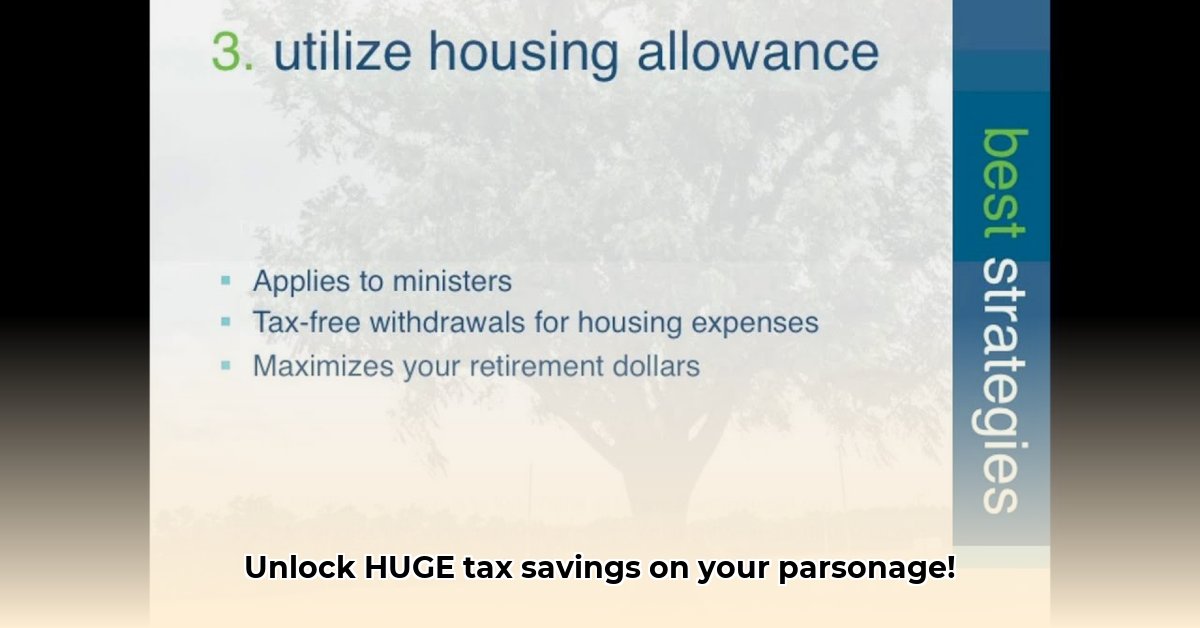
Understanding the tax implications of your pastor's housing allowance can be complex, but proper planning can significantly reduce your tax burden. This comprehensive guide provides actionable steps to maximize your benefits while ensuring full compliance with IRS regulations.
Understanding the Pastor's Housing Allowance
The IRS allows ministers to exclude a portion of their housing allowance from taxable income. This isn't "free money," but a significant tax break specifically designed for clergy. It reduces your tax bill by allowing you to exclude a certain amount of housing expenses from your reported income. This exclusion helps to offset the costs associated with providing a place to live, a key component of ministry.
Setting Up Your Housing Allowance: A Step-by-Step Guide
Establishing your housing allowance correctly is paramount. Follow these steps for optimal results:
1. Meticulous Expense Tracking: Maintain detailed records of all housing-related expenses. This includes mortgage payments (principal and interest), rent, utilities (electricity, gas, water, sewer, trash), property taxes, homeowner's insurance, and any necessary repairs or maintenance. Digital record-keeping and a dedicated spreadsheet are recommended. This meticulous approach forms the bedrock of accurate reporting and avoids potential complications.
2. Determining Fair Market Value (FMV): Research rental rates for comparable properties in your area. Consider factors like size, location, amenities, and condition to arrive at an accurate FMV. Online real estate resources and local real estate agents can be invaluable in this process. Accurate FMV determination is critical to maximizing your allowance and ensuring proper compliance.
3. Official Designation by Your Church: Your church or religious organization will officially designate your housing allowance amount. This is a crucial step in the process. The amount you can exclude from your income is the lower of: the officially designated amount, your actual housing expenses, or the FMV. Understanding this relationship is key to optimizing your tax benefits.
4. Consistent Record-Keeping: Maintaining comprehensive and organized records is non-negotiable. The IRS may request documentation, so be prepared to provide detailed supporting evidence for all claimed expenses. Consider using accounting software to simplify this process.
Understanding the Tax Implications
It's vital to differentiate between an exclusion and a deduction. A housing allowance is excluded from your gross income for federal income tax purposes. However, it is included when calculating self-employment tax (SECA). This distinction is critical. If your allowance exceeds the allowable exclusion, the surplus becomes taxable income. Careful planning and precise record-keeping are essential to avoid this situation. Have you considered the potential long-term impact on retirement savings? A lower current taxable income might mean less contributed to retirement plans.
Long-Term Financial Planning: Looking Ahead
While a higher housing allowance lowers your current taxable income, it may influence your retirement savings. This is a trade-off that requires careful consideration. Consult a financial advisor to integrate your housing allowance into a comprehensive long-term financial plan, considering potential impacts and strategies to mitigate any risks. This strategic approach will enable a balanced approach to both immediate and long-term financial well-being.
Potential Pitfalls and Mitigation Strategies
Several risks exist when managing a housing allowance. Proactive steps are necessary to minimize these risks and maintain compliance.
| Risk Category | Mitigation Strategies |
|---|---|
| Overstating the Allowance | Precise expense tracking, professional tax advice, regular allowance review. |
| Non-compliance with IRS rules | Stay informed on current IRS regulations, seek expert tax guidance. |
| Impact on Retirement Savings | Integrate housing allowance into long-term financial planning; diversify investments. |
Essential Considerations: Keys to Success
Expert Guidance: A tax professional experienced with pastors' housing allowances is crucial. They provide personalized advice, ensuring compliance and maximizing benefits. Don't hesitate to seek their expertise.
Regular Reviews: Life circumstances and housing costs change. Regularly review both your housing allowance and your expenses to maintain alignment with the current situation and fair market value. This ongoing vigilance is essential to maintain maximum tax benefits.
Staying Informed: IRS regulations evolve. Stay updated on the latest rules and guidelines. Consulting a tax expert ensures ongoing compliance with changes in the tax code.
Your pastor's housing allowance represents a significant financial advantage. Careful planning, accurate record-keeping, and professional guidance will enable you to leverage this benefit effectively, securing your financial future. Proactive management and the guidance of a qualified advisor are your best allies in navigating these complexities.